The basic filament cost formula
material cost = (spool price ÷ net grams) × grams usedUse the filament’s net weight. Do not include the empty spool or shipping packaging.Spool price: $24.00
Net filament: 1,000 g
Project usage: 85 g
$24.00 ÷ 1,000 × 85 = $2.04
If the project uses two materials, calculate each contribution separately and add the results. This also works for a small quantity of support material from a second spool.
Which grams should you use?
The slicer’s material estimate is a practical starting point for a successful print. If you weigh the finished part, remember that supports, brims, purge, calibration lines, and failed attempts may have consumed additional material.
Choose the number that matches the question:
- Cost of the finished object: use the material assigned to that successful print.
- Cost of producing the result: include supports, purge, and failed attempts attributable to it.
- Cost of using the whole spool: reconcile any unrecorded material when the spool is empty.
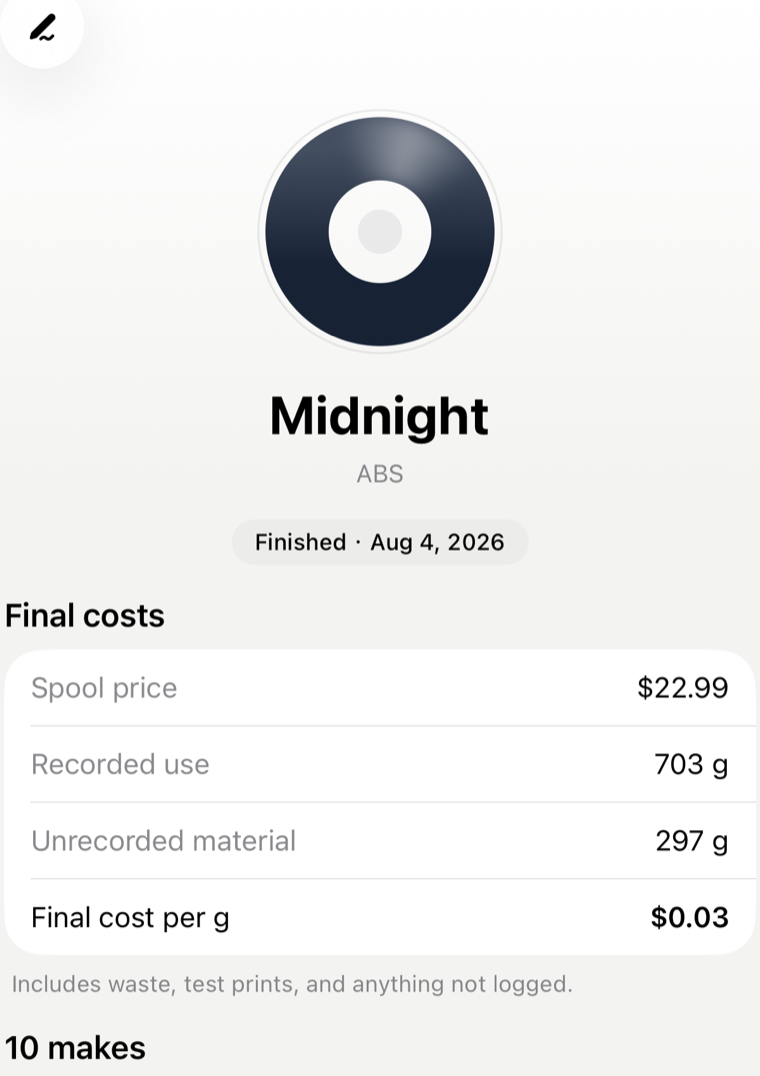
Why the final cost can change when a spool is empty
Suppose the spool began with 1,000 g, but your saved projects account for only 910 g when the spool is empty. The missing 90 g may be purge, supports, failed prints, samples, or forgotten entries.
You can keep the original project estimates unchanged, add the 90 g as waste, or distribute the difference across the projects from that spool. There is no single correct choice for a hobby record. The important part is labeling the method so an estimated part cost is not mistaken for complete production accounting.
What material cost does not include
The grams formula covers filament only. A commercial quote may also need to include electricity, machine depreciation, maintenance, failed-print risk, design time, setup, post-processing, packaging, tax, platform fees, and profit.
For personal makers, keeping material cost separate is often more useful than pretending a rough all-in number is precise. It answers a clear question: approximately how much filament value went into this piece?
How Spoolery calculates it
Spoolery stores the spool price and net weight, then applies the grams used by each saved make. When a spool is marked finished, it can account for unrecorded material in the final spool history. The app shows the inputs so the estimate remains understandable.
Method and scope: Currency does not change the formula. Tax and shipping can be included in the spool price if you want a landed material cost, but use the same convention across spools for meaningful comparisons.