Method 1: use a recorded-usage estimate
estimated remaining = original net weight − recorded usage“Recorded usage” should include printed pieces plus any waste adjustments you choose to log.A 1,000 g spool has 610 g of recorded prints and 35 g of recorded waste. Estimated remaining: 1,000 − 610 − 35 = 355 g.
This method is convenient because it updates after every saved project. It is useful for choosing between spools and checking whether a planned print is obviously larger than the material likely left.
It remains an estimate. Slicer calculations, purge, supports, failed prints, sample lines, and anything you forgot to record all create drift.
Method 2: weigh the spool
measured filament = current gross spool weight − empty-spool tareThe tare must match the same spool type. Cardboard and plastic spools—and even different models from one brand—can weigh differently.The spool and filament weigh 742 g. The matching empty spool weighs 238 g. Measured filament: 742 − 238 = 504 g.
If the manufacturer publishes a reliable tare weight, you can use it. A matching empty spool measured on your own scale is better. If neither is available, treat the result as approximate.
Which method should you use?
- Use the ledger for everyday shelf decisions, remembering what a color produced, and rough planning.
- Use a scale before a long print, when the spool is close to empty, or when a failed job would be expensive.
- Use both to spot missing usage. A large difference is a signal to add a waste adjustment or correct the starting weight.
Can grams be converted to meters?
Only approximately. Filament length depends on material density and diameter. Two spools with the same weight can contain different lengths if their materials or actual diameters differ. For deciding whether a slicer-estimated 180 g job will fit, grams are usually the cleaner comparison.
How Spoolery handles remaining filament
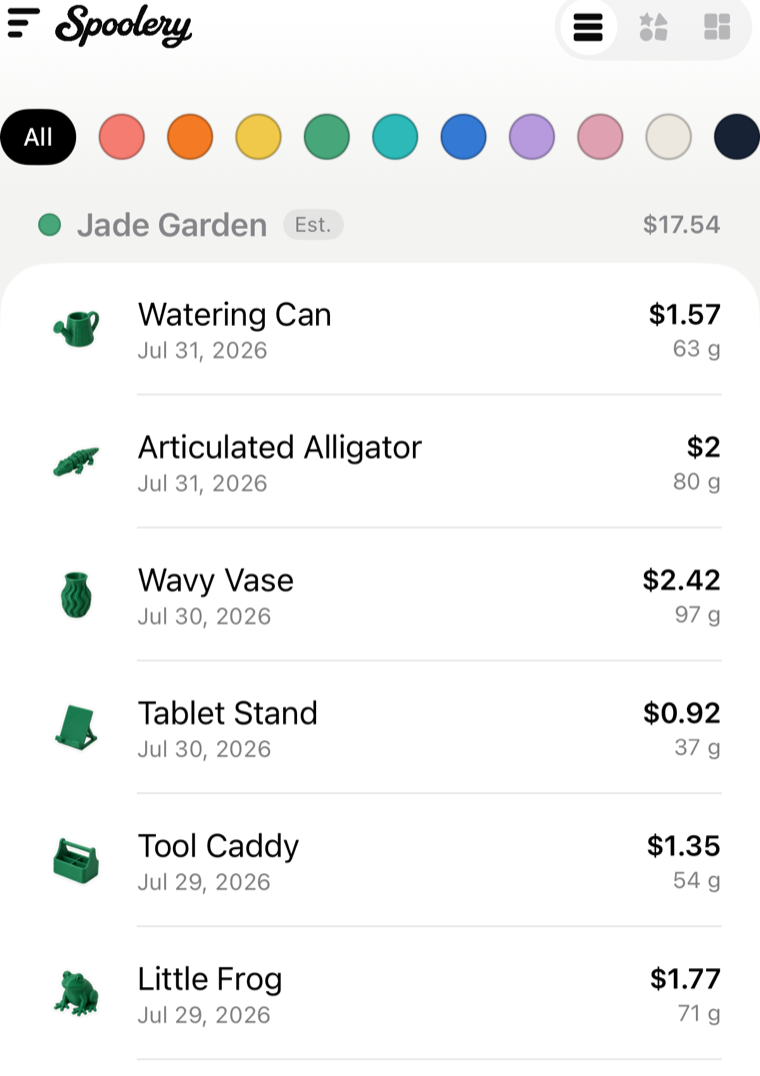
Spoolery uses the original net weight minus the usage you record, so the number is a transparent ledger estimate. It does not claim to measure the spool remotely. When a spool is finished, you can reconcile unrecorded material so the final history and cost remain understandable.
Method and scope: Scale accuracy, tare variation, slicer estimation, and unrecorded waste can affect the result. For a print that must not run out, leave a safety margin or measure the spool physically.